
Welcome to Itsubo Lab !
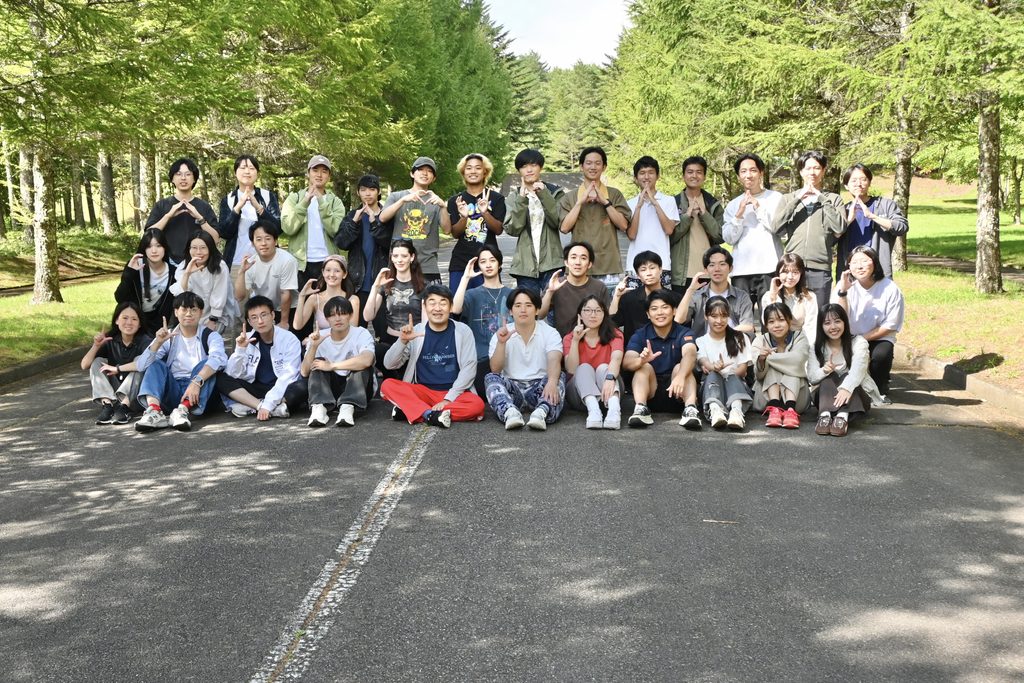
Every human activity carries an environmental footprint. Taking a life-cycle perspective, our laboratory recognizes the vital importance of minimizing environmental impacts. Here, you will acquire the essential knowledge to evaluate products with greater accuracy and appropriateness. We conduct Life Cycle Assessments (LCA) and Life Cycle Costing (LCC)—key methodologies for analyzing and evaluating the environmental aspects of products—to research and assess environmental risks.
| Month / Period | Research Activities | Events & Socials |
| April | Deciding Research Themes | Hanami (Cherry Blossom Viewing / Welcome Party for 4th-Year Undergraduates) |
| May | Research Planning | - |
| June | Literature Review & Surveys | - |
| July | - | First-Semester Wrap-up Party |
| August | - | Open Campus |
| September | Midterm Presentation | Seminar Training Camp (Zemi Gasshuku) |
| October | - | Alumni Networking Event (OB/OG Meeting) |
| November | - | Waseda Festival / Science and Engineering Exhibition (Rikoten) |
| December | - | Year-end Party (Bonenkai) / Eco-Products Exhibition |
| January | Graduation Thesis Submission | Alumni Networking Event (OB/OG Meeting) |
| February | Final Presentation / Defense | - |
| March | LCA Conference Presentation | - |
Student Diversity
International Students
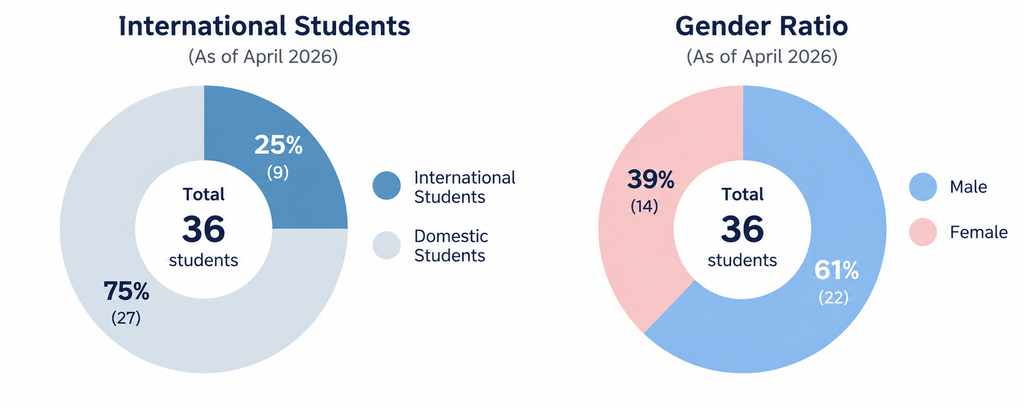
As of April 2026, 9 out of 36 students (25%) are international students.
Gender Ratio
As of April 2026, the laboratory consists of 22 male students (61%) and 14 female students (39%).
Research Details
What is LCA?
Life Cycle Assessment (LCA) is a method for quantitatively measuring the environmental impact of a product or service across its entire life cycle, from raw material extraction to disposal ("cradle to grave"). LCA is internationally recognized as a tool for corporate environmental management, and its procedures are standardized under ISO (International Organization for Standardization).
Our Research
The Itsubo Lab conducts life cycle inventory analysis and life cycle impact assessment across a wide range of products, events, and organizations. For example, in the case of a paper beverage carton, the lab traces environmental loads through each life cycle stage — material production, manufacturing, transport, disposal, and recycling — based on hearing surveys with manufacturers. Environmental burdens are then integrated into a single monetary indicator to compare impacts such as climate change (CO2) and air pollution (SOx, NOx). We are also covering biodiversity as a hot topic these days.
Recent research themes include:
- Product-focused assessments: recycling of carbon fiber reinforced plastics, LCA of clothing made from bagasse-based Japanese paper yarn, environmental and social impacts of EV adoption, and assessment of soy-based meat alternatives
- Event-focused assessments: environmental impact of FUJI ROCK FESTIVAL '22, carbon footprint of Osaka Expo pre-events and soccer tournaments
- Organization-focused assessments: Scope 3 emissions calculation for Tokyo City University, and greenhouse gas assessment for the Japan Football Association
- AI/IoT-based research: solar power generation forecasting using image analysis and deep learning, food loss reduction through automated ordering systems, energy analysis of HVAC systems using big data and AI, and dynamic carbon footprint assessment using factory IoT
- Input-output-based research: natural capital assessment using multiregional input-output analysis, and development of biodiversity damage assessment methods within LCIA
- Biodiversity Impact Assessment Indicators: Research on “Nature Positive” and natural capital, in addition to existing assessment criteria
Development of Assessment Methodology
The lab also leads development of LIME (Life-cycle Impact assessment Method based on Endpoint modeling), a Japanese national LCA project that translates environmental burdens into damage to human health, social assets, biodiversity, and primary production, ultimately integrating them into a single weighted index.
Our Professor

Norihiro Itsubo
Born in 1970, Professor Itsubo has spent his career developing life cycle impact assessment methodology, including Japan's national LIME framework, and applying it to industry. He previously served as Professor and Dean of the Graduate School of Environmental and Information Studies at Tokyo City University before joining Waseda University in 2023.
Affiliation
Department of Environmental Science and Engineering, School of Creative Science and Engineering, Waseda University
Degree
Ph.D. in Engineering, The University of Tokyo (1998)
Career History
| Year | Position |
|---|---|
| 1998 | Completed Ph.D., Department of Materials Engineering, Graduate School of Engineering, The University of Tokyo; Researcher, LCA Development Promotion Department, Japan Environmental Management Association for Industry (JEMAI) |
| 2001 | Researcher, LCA Development Promotion Department, Research Center for Life Cycle Assessment, National Institute of Advanced Industrial Science and Technology (AIST) |
| 2003 | Team Leader, LCA Methodology Research Team, Research Center for Life Cycle Assessment, AIST |
| 2005 | Associate Professor, Tokyo City University |
| 2011 | Director (concurrent), Research Center for Life Cycle Impact Assessment, Research Institute, Tokyo City University |
| 2013 | Professor, Tokyo City University |
| 2023 | Professor, Waseda University (current) |
Research Interests
- Environmental science
- Materials engineering
- Life cycle impact assessment
- Development of environmental assessment methodologies
Selected Awards
- LCA Forum Japan Chairman's Award, 15th LCA Forum Japan — "Development of LIME3: A Method for Assessing Global-Scale Environmental Impacts" (with R. Yun, K. Murakami, A. Motoshita, R. Ii, K. Matsuda, K. Yamaguchi, A. Inaba; February 2019)
- Best Paper Award, 13th Japan LCA Society — "Development of Human Health Damage Factors for PM2.5 Based on a Global Chemical Transport Model" (with R. Yun, T. Nagashima, K. Hasegawa, T. Ohara, K. Sudo; March 2018)
- Best Paper Award, 6th Japan LCA Society — "Development of Characterization Factors for Water Resource Impacts Considering Differences in Water Sources Using a Global Water Resources Model" (with S. Yano, N. Hanasaki, T. Oki; March 2015)
- Best Paper Award, 5th Japan LCA Society — "Environmental Impact Assessment of I-131 Released by the Nuclear Power Plant Accident: Comparison of Health Impact Assessments With and Without Consideration of Release Location and Timing" (with T. Kubo, Y. Morino, T. Ohara; March 2014)
- Best Paper Award, 3rd Japan LCA Society — "Development of Impact Factors on Damage to Health by Infectious Diseases Caused by Domestic Water Scarcity" (with A. Motoshita, A. Inaba; March 2012)
- Merit Award, 2nd Japan LCA Society — "Development and Dissemination of the Life Cycle Impact Assessment Method LIME" (March 2011)
- Best Presentation Award, 12th Conference of the Japan Telework Society — "Comparing CO2 Emissions of Telework Center Use and Working from Home" (with T. Kaneko; June 2010)
- Encouragement Award, 6th LCA Forum Japan — "Development of an Assessment Database for Large-Scale Exhibitions and Its Application to Quantitative Environmental Assessment" (Itsubo Laboratory, Tokyo City University; December 2009)
- Best Paper Award, Japan Environmental Management Association for Industry — "Current Challenges and Future Prospects of LCA" (September 2004)
- Encouragement Award, Reliability Engineering Association of Japan — "LCA Evaluation of IC Packages" (with M. Kobayashi; May 2003)
Outreach and Achievements
The lab actively shares its research through exhibitions and conferences (e.g., Eco-Pro, the Japan LCA Society, FUJI ROCK FESTIVAL NGO Village, QWS FES) and has achieved milestones including the publication of an input-output database (2010), a water use/consumption database (2013), an environmental footprint database (2013), release of LIME3 impact assessment coefficients (2018), and multiple best student presentation awards at the Japan LCA Society (2021, 2022).
BRiDGE Project
The BRiDGE Nature Footprint Project was launched in October 2024 under the Japanese Cabinet Office's BRIDGE (Bridging the gap between R&D and the IDeal society (Society 5.0) and Generating Economic and social value) program.
Led by Waseda University and Value Management Institute, Inc., the project focused on the development and demonstration of Nature Footprint methodologies for promoting nature-related information disclosure by financial and investment institutions and for international standardization.
The project advanced LIME (Life cycle Impact assessment Method based on Endpoint modeling) to develop a Nature Footprint methodology capable of quantitatively assessing impacts on biodiversity and ecosystem services from a life-cycle perspective. The methodology was also demonstrated in collaboration with financial institutions, companies, and other organizations to explore its practical application.
Learn more about the BRiDGE Nature Footprint Project
SPEED Research Group
Following the BRiDGE project, research and practical activities related to Nature Footprint have continued within the SPEED Research Group.
SPEED is a research network that promotes collaboration among academia, industry, and other stakeholders on environmental innovation and green business. Its activities cover a broad range of sustainability topics, including climate change, natural capital, biodiversity, circular economy, and environmental assessment.
Learn more about the SPEED Research Group
Nature Footprint Consortium
In July 2026, the Nature Footprint Consortium (NFC) was established within the SPEED Research Group to further advance the research and outcomes developed through the BRiDGE project.
The consortium promotes the development, practical implementation, and wider dissemination of Nature Footprint methodologies based on life-cycle thinking. Through collaboration among industry, academia, financial institutions, and other stakeholders, it aims to support corporate and financial decision-making related to biodiversity, ecosystem services, and natural capital, while also contributing to international standardization.